
How a Specialized Medical Device CRM Shortens Hospital Sales Cycles
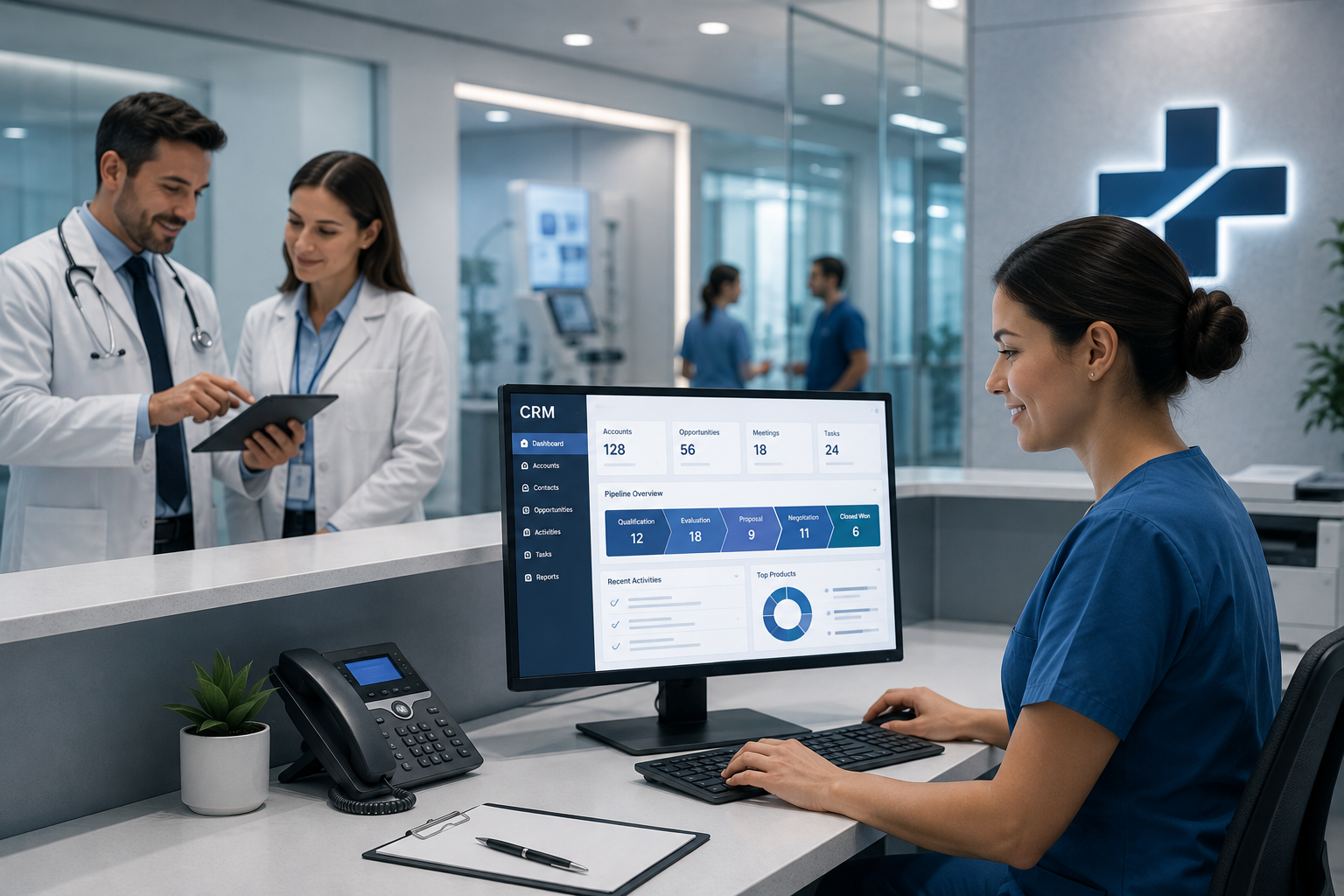
Medical device CRM by Trinity Relationship Management
Ten months to close to one deal is not unusual in medical device sales. Doctors have to sign off, procurement has to approve the price, IT has to clear the tech and then the approval of the committees. Every approval adds another week.
Regular CRMs weren’t built for this. They handle contacts and deals fine but they miss hospital approval chains and paperwork like FDA documentation. Reps end up tracking half the deal in spreadsheets and things slip through.
A medical device CRM fixes that. It’s built around how hospitals actually buy, so reps can see what’s holding a deal up and act on it fast.
Why Hospital Sales Cycles Get Stuck
Too Many Decision-Makers, One Sales Opportunity
A hospital purchase rarely depends on a single person saying yes. Clinicians may assess the product, department heads may influence the decision and procurement teams often handle commercial negotiations.
Finance, administration and other stakeholders can also enter the process. Without a connected account view, reps may struggle to understand who has been contacted and where each person stands.
Manual Follow-Ups Create Expensive Delays
A promising conversation can lose momentum when the next action lives in someone’s inbox or notebook. Scattered emails, spreadsheets, calls and sales notes make follow-up harder to manage consistently.
A CRM for lab & medical equipment manufacturers can bring communication history, tasks, contacts and opportunities together. Reps can see what happened and what needs attention without reconstructing the deal from multiple sources.
Product Evaluations Add Another Layer
Medical devices often require demonstrations, trials, evaluations, clinical feedback and internal discussions before procurement moves forward. Each interaction can affect the next step. A clear opportunity timeline helps sales teams track who participated, what was discussed and which action is still outstanding.
How a Specialized Medical Device CRM Speeds Up the Process
Centralized Stakeholder and Account Data
A specialized healthcare CRM gives sales reps a clearer view of each hospital account. That view can include locations, departments, contacts, interactions, opportunities and follow-up activities.
Instead of searching through separate records, reps can prepare for meetings using current account information. That saves administrative time and reduces the chance of overlooking an important stakeholder.
Automated Follow-Ups Keep Deals Moving
Follow-up reminders, scheduled communications, task automation and opportunity alerts can help prevent promising deals from going quiet. Automation isn't about replacing the relationship between a rep and a hospital. It handles repetitive administrative steps so salespeople can focus their attention on conversations that require judgement and trust.
Better Pipeline Visibility Helps Managers Act Earlier
Sales managers need to know which opportunities are moving and which are quietly becoming stuck.
A specialised CRM can highlight overdue tasks, inactive opportunities and stages where deals consistently slow down. Managers can then address problems earlier instead of discovering them during a late pipeline review.
Features That Matter for Medical Device Sales
Territory and Account Management
Hospital networks can span multiple locations, departments and buying groups. A CRM should make these relationships easy to understand.
Account hierarchies, territory visibility, opportunity ownership and contact relationships can help teams avoid duplicated outreach and unclear responsibilities.
Compliance-Friendly Documentation
Medical device sales involve sensitive business processes and detailed customer interactions. Organised records can help teams maintain consistent documentation throughout the sales process.
However, CRM software alone doesn't guarantee regulatory compliance. Buyers should assess security, permissions, data handling, governance and documentation capabilities against their organisation's specific requirements.
Reporting Built Around the Sales Cycle
Useful dashboards should answer practical questions. Which deals are stalled? Which stages create delays? Where are follow-ups overdue? How accurate is the current forecast?
Sales leaders can use these insights to identify bottlenecks across territories, products or accounts. The goal isn't collecting endless metrics. It is giving teams information they can actually use to make decisions.
What Changes for Sales Reps and Sales Leaders?
Reps Spend Less Time Managing Data
A connected system can reduce the administrative work surrounding each opportunity. Reps can review previous conversations, stakeholder information, activities and upcoming tasks from one record.
That also makes preparation easier before a hospital meeting. Instead of digging through old emails, the rep can quickly understand the account's current position.
Managers Gain a Clearer View of Every Deal
Standardised pipeline stages make sales reviews more meaningful. Leaders can compare opportunities across territories and identify where deals are slowing down.
Imagine a rep previously tracking a hospital opportunity through a spreadsheet, email threads and personal notes. With a CRM, the same opportunity can show stakeholders, activities, tasks, product interest, and next steps in one place. That shift turns scattered activity into a visible sales process.
How to Choose the Right Medical Device CRM
Before investing, assess whether the platform supports your actual sales workflow. Look at medical device and healthcare processes, system integrations, customisation, scalability, security, reporting, forecasting, mobile access and user adoption.
The strongest CRM isn't necessarily the platform with the longest feature list. It is the one that removes the bottlenecks slowing your sales team today.
Conclusion
Hospital sales cycles rarely slow down because sales reps aren't working hard enough. More often, fragmented information, unclear ownership, missed follow-ups and limited visibility create unnecessary friction.
A specialised medical device CRM can bring these moving parts into a more organised workflow. Sales teams gain clearer stakeholder information, better follow-up management and stronger pipeline visibility.
If your hospital sales process feels slower than it should, TRINITY CRM can help you evaluate the gaps and explore CRM capabilities designed to turn sales activity into measurable momentum.
FAQs
How does a medical device CRM shorten hospital sales cycles?
It centralises account data, tracks stakeholders, automates follow-ups and highlights stalled opportunities so teams can act sooner.
What is the difference between a generic CRM and a medical device CRM?
A specialised platform can support workflows built around healthcare and medical device sales, including complex accounts and product evaluations.
Can a CRM manage multiple hospital stakeholders?
Yes. Account hierarchies, contact records, opportunity tracking and activity histories can help teams manage relationships across departments and locations.
What are examples of CRM in healthcare?
Healthcare organisations may use CRM platforms for sales, account management, customer engagement, service coordination and relationship tracking.