
Losing Deals to Instant Lenders? How B2B Lending Automation Reclaims Your Market Share
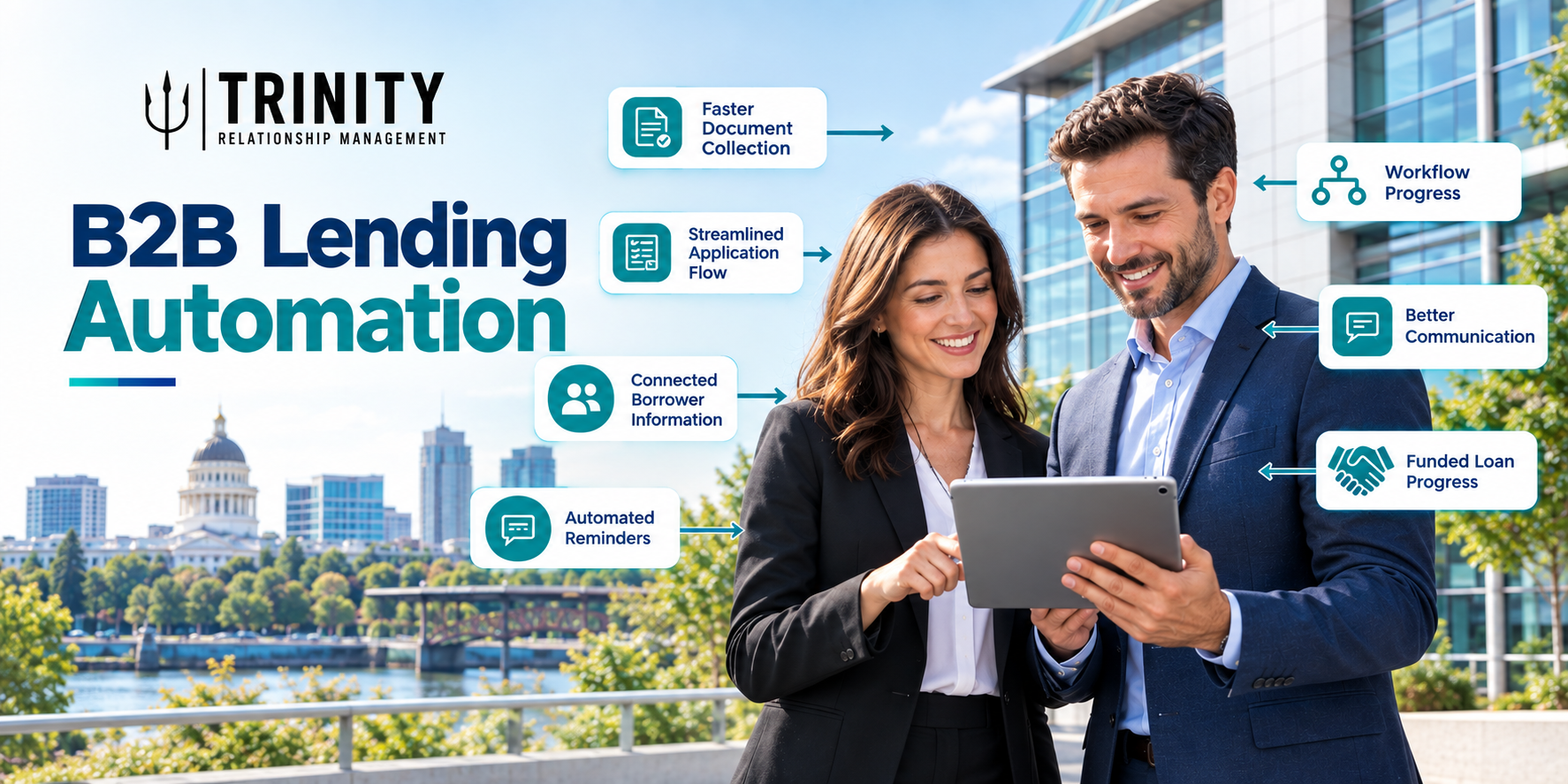
B2B Lending Automation
A business needs financing to buy equipment, replenish inventory, or fund expansion. It approaches several lenders and starts comparing the experience.
One lender asks for documents, sends a clear checklist, and keeps the business updated. Another requires repeated information and leaves the application waiting for a response.
The faster and clearer process can win the opportunity. That is where B2B lending automation becomes relevant. Business loan applications often involve financial statements, bank records, ownership information, and multiple stakeholders. Moving that information manually can create delays at several stages.
Automation can connect those stages, improve communication, and help lending teams handle more applications without adding the same administrative workload.
Table of Contents
Where Traditional Lending Workflows Lose Deals
How B2B Lending Automation Speeds Up the Path From Application to Funding
Improve Communication Between Lending Teams and Applicants
Turn Lending Automation Into Better Customer Relationship Management
What B2B Lending Automation Features Are Important
Prove Whether Automation Is Reclaiming Lost Opportunities
What to Look for Before You Buy
Concluding Words
FAQs
Where Traditional Lending Workflows Lose Deals
Slow Application and Document Collection
B2B applications can require substantial financial and business documentation.
When teams manually enter information or request documents through separate emails, applicants can receive repeated requests or unclear instructions. Staff then spend time checking what has arrived and what remains outstanding.
Good loan application process support should make requirements clear from the start and keep the application moving as information arrives.
Underwriting Constraints
Business applications can vary significantly in complexity.
A straightforward application may sit behind a case requiring detailed review because both follow the same manual queue. Underwriters then spend time on routine checks while more complex cases wait.
Workflow automation can apply predefined rules and route applications according to configured criteria, while exceptions remain with human reviewers.
The Communication Gap
Business borrowers have deadlines too. If a company needs financing before an equipment purchase or inventory order, unclear application status can become a commercial problem.
Automated document reminders, status updates, and next-step notifications give applicants clearer visibility without requiring lending staff to manually manage every interaction.
How B2B Lending Automation Speeds Up the Path From Application to Funding
B2B lending automation connects repetitive stages of a business lending workflow instead of relying on employees to move information manually between systems. A typical process can follow:
Business application → Financial data → Document collection → Verification → Credit review Underwriting → Approval → Documentation → Funding
The value comes from connecting those stages. When a document arrives, the right workflow should know what happens next.
Automate Routine Checks and Data Handling
Automation can capture business and applicant information, trigger document requests, create tasks, apply workflow rules, and route applications.
This is where automation of repetitive lending tasks has a practical impact. Staff spend less time copying information between systems and more time reviewing cases that need their expertise.
Keep Complex Decisions With Your Lending Team
Automation should handle repeatable processes, not replace credit judgment.
Business applications can contain unusual ownership structures, inconsistent financial information, or circumstances that fall outside standard rules. Those cases should move to the appropriate lending professional.
That also supports proper oversight when automated systems contribute to credit decisions.
Improve Communication Between Lending Teams and Applicants
Give business Borrowers Immediate Visibility
A business borrower should be able to understand:
Whether the application was received
Which documents are still required
Whether additional information is needed
What stage the application has reached
What happens next
Automated notifications can deliver these updates without requiring staff to send each message individually.
Reduce Manual FOLLOW-UP
Suppose a business has not submitted its latest bank statement.
Instead of leaving the application in someone’s queue, an automated workflow can send a reminder and flag the application for staff attention if the required information remains outstanding.
That keeps the process moving while preserving human intervention where needed.
Make Every Handoff Clear
Sales may originate the opportunity. Lending reviews the application. Operations handles documentation and funding.
If each team works from different information, the business borrowers can end up repeating the same details. Centralized records make managing borrower information easier across the lending lifecycle.
Turn Lending Automation Into Better Customer Relationship Management
Give Teams a Complete Customer View
B2B lending is rarely limited to a single transaction.
A CRM can connect company information, contacts, applications, communications, financing history, and follow-up activity. Sales and lending teams can then see the broader relationship instead of treating every application as an isolated record.
This is where lending software streamlines more than processing. It can connect the lending workflow with the customer relationship surrounding it.
Stay Connected After the deal Closes
The relationship can continue through renewals, additional financing, and future business needs.
A lender that has deployed Salesforce Marketing Cloud, for example, can use connected customer data to support structured communication journeys. The actual campaigns and workflows should reflect the lender’s configured Salesforce environment.
Choose CRM automation when you want to manage the business relationship beyond the original loan.
What B2B Lending Automation Features are Important
The useful features are those that address real B2B lending constraints.
| Capability | B2B lending purpose |
|---|---|
| Business application intake | Captures company and financing information |
| Document automation | Manages financial and business documents |
| Workflow rules | Routes applications through defined stages |
| CRM + LOS integration | Connects sales, lending and customer history |
| Applicant notifications | Automates requests, reminders, and updates |
| Underwriting workflow | Organizes reviews and outstanding actions |
| Exception routing | Sends non-standard cases to human reviewers |
| Reporting | Measures application status and turnaround |
| Audit trails | Records workflow activity and access |
The right platform should connect these functions rather than create another isolated system.
Prove Whether Automation is Reclaiming Lost opportunities
Start with your current process and establish a baseline. Then track:
Application abandonment rate
Application-to-decision time
Document collection time
Manual touches per application
Application-to-funded-loan conversion
Applications handled per employee
Applicant response time
These numbers show whether the changes are actually reducing friction. If a vendor promises a percentage improvement, ask how that figure was measured. Your own baseline is the more useful comparison.
What to Look for Before You buy
Before choosing a platform, check whether it can:
Integrate with your CRM and LOS
Support configurable B2B workflows
Route exceptions for human review
Centralize business and borrower information
Provide audit trails and access controls
Report application and turnround data
Scale with application volume
Support implementation and ongoing maintenance
Choose the system that removes your measurable bottlenecks, not the system with the longest feature list.
Concluding Words
B2B borrowers have commercial deadlines. A financing process that takes too long can push a business towards another leader before your team finishes the review. B2B lending automation addresses the operational side of that problem by connecting applications, documents, workflow routing, communication, and customer information.
The practical approach is clear: automate repeatable work, keep credit judgement with your lending team, and connect the application to the wider business relationship. Speed can help you protect the deal. A connected CRM can help you protect the relationship that follows.
Yu do not need to automate every lending decision. You need to remove the manual steps that slow your team down and frustrate business borrowers. Trinity CRM can help connect borrower information, lending workflows, communication, and follow-up so your team can spend less time chasing processes and more time managing lending relationships. Reach out today.
FAQs
What is B2B lending automation?
B2B lending automation uses software to automate repeatable processes involved in business lending, including applications, documents, workflow routing, communication, and follow-up.
How does lending automation help prevent lost deals?
It reduces avoidable delays in application intake, document collection, internal handoffs,a nd borrower communication, helping business applications move through the lending workflow more consistently.
Can automation improve communication with loan applicants?
Yes. Automated confirmations, document requests, reminders, and status updates can keep business borrowers informed without requiring every communication to be sent manually.
How does CRM automation help lenders?
It connects business and borrower information, application history, communications, financing activity, and follow-ups. This gives sales and lending teams a shared view of the customer relationship.